

This version of Emerson Hancock could change things
Six no-hit innings of nine-strikeout ball? Ooooookay, man.

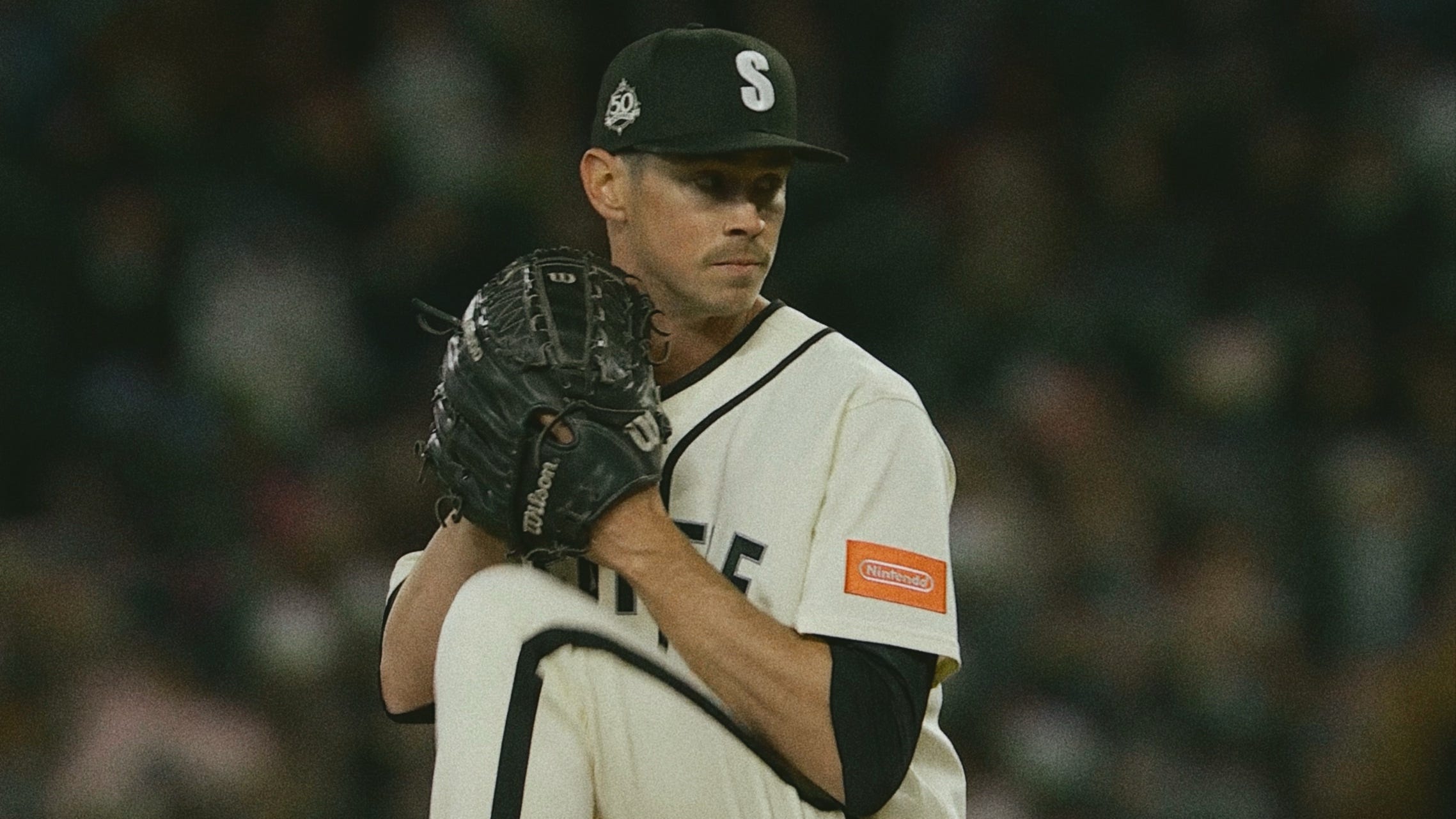
For the third consecutive year, Emerson Hancock was left to understand that he wasn’t a Major League starter but the Mariners needed him to be one for at least a little bit.
Two seasons ago, he filled in for Bryan Woo when the righty went down with an inflamed elbow. Last year, George Kirby’s ailing shoulder thrust Hancock into the back end of the Mariners rotation.
Officially, the anniversary of his 2025 debut would be tomorrow, the 31st—but spiritually, it’s today, Hancock taking the ball for a Monday lid-lifter against the Tigers after the M’s faced the A’s for four on the opening weekend.
He opposed Jackson Jobe in a 6:40 p.m. start, a chilling 47-degree evening much like tonight will be.
Emerson Hancock’s ERA after that start: 81.00.
Eighty-one.
Double, single, home run, single, walk, fly out, single, single, double.
Dan Wilson went out to get him—and, presumably, called him into his office a few hours later for a solemn meeting. One start, one 15-minute start and it was back to Tacoma.
Slightly different vibe last night.
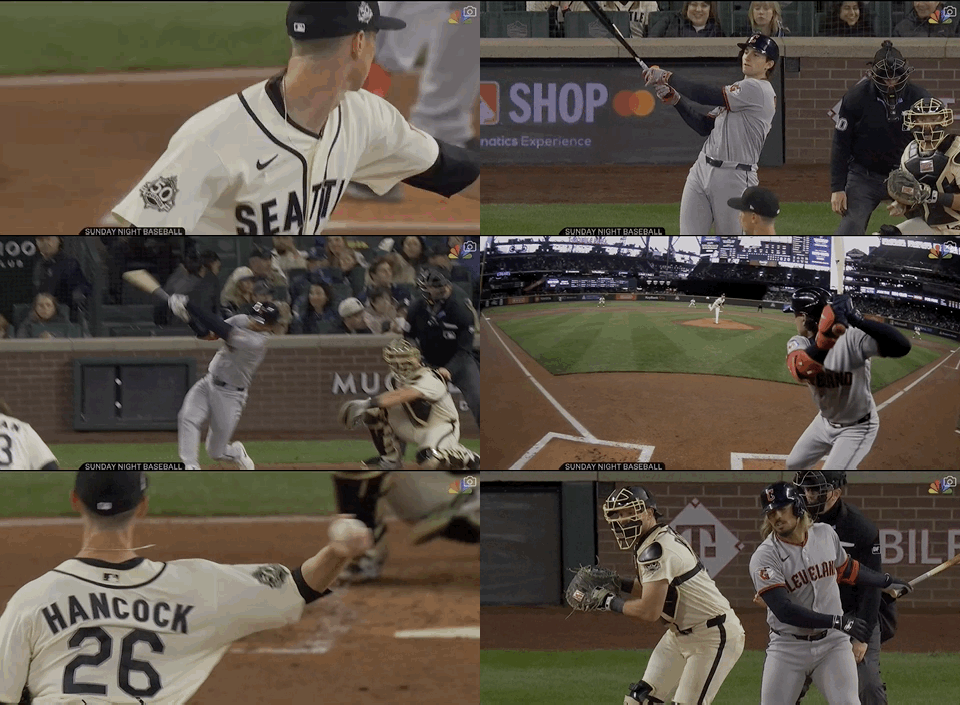
The six no-hit innings were absurd. The nine strikeouts were a career best. His 12 swinging strikes were the third-most he’s ever posted.
It’s real early but the models confirm progress.
I’ll be honest, I’m just wading into this stuff. But I love metrics where nerds I trust, nerds who are waaaaay smarter than me, take important stuff and distill it down into a relatively easy-to-understand model—ideally like wRC+ where 100 is average and you go up or down from there.
In this case, it’s pitching—a big part of it is having good stuff and locating your stuff.
Thus, you have Pitching+, Stuff+ and Location+ from FanGraphs—all modeled off real-world Statcast data.
In short:
Pitching+ is one of three models that, along with Stuff+ and Location+, attempts to look at the process underlying a pitcher’s performance in order to remove some of the noise that can be present when looking at on-field results.
The sample is so small but here:
Stuff+
Last night: 99
Career: 90
Location+
Last night: 116
Career: 100
Pitching+
Last night: 110
Career: 90
I should say, this isn’t the first time in his career he’s ever posted numbers like this—his last start of 2025, a four-inning stint vs. the Rockies, he notched a 116 Stuff+ and 128 Pitching+. This was after he’d transitioned to relief and began some of the work that led to what we saw last night so maybe there’s something there.
He also posted similarly good numbers (114 Pitching+) in a 1.2-inning relief outing vs. the Angels earlier last September.
So we’ll see. It’s one start—one outstanding, dominant start that represents the best he’s ever looked in a Mariners uniform.
We didn’t see the velo gains Hancock posted in spring training but maybe we will when the gametime temperature climbs out of the 40s.
Either way, if the Mariners receive in 2026 a truly transformed Emerson Hancock, that isn't an insignificant development.
What happens when Bryce Miller is healthy and ready to go? Do they send Hancock to the minors? They couldn’t possibly do something with Luis Castillo and his contract could they?
I have no idea.
One, these things tend to sort themselves out, for better and usually (gulp) worse.
But if Hancock is truly a middle-of-the-rotation starter instead of a swingman #6 type or worse, the Seattle Mariners are a more talented team than they were previously.
How they deploy it matters, yes, but the offseason adage holds true here: add talent and figure out the rest later.
Right now, Emerson Hancock looks more talented than he has at any point in his Mariners career.
Good for him.